
E-mail:
jessie@steelart-works.com
jessie@steelart-works.com
Date:2026-08-31 Categories:Art Fabrication Guides & Maintenance Hits:404 From:JESSIE ARTWORKS
Introduction
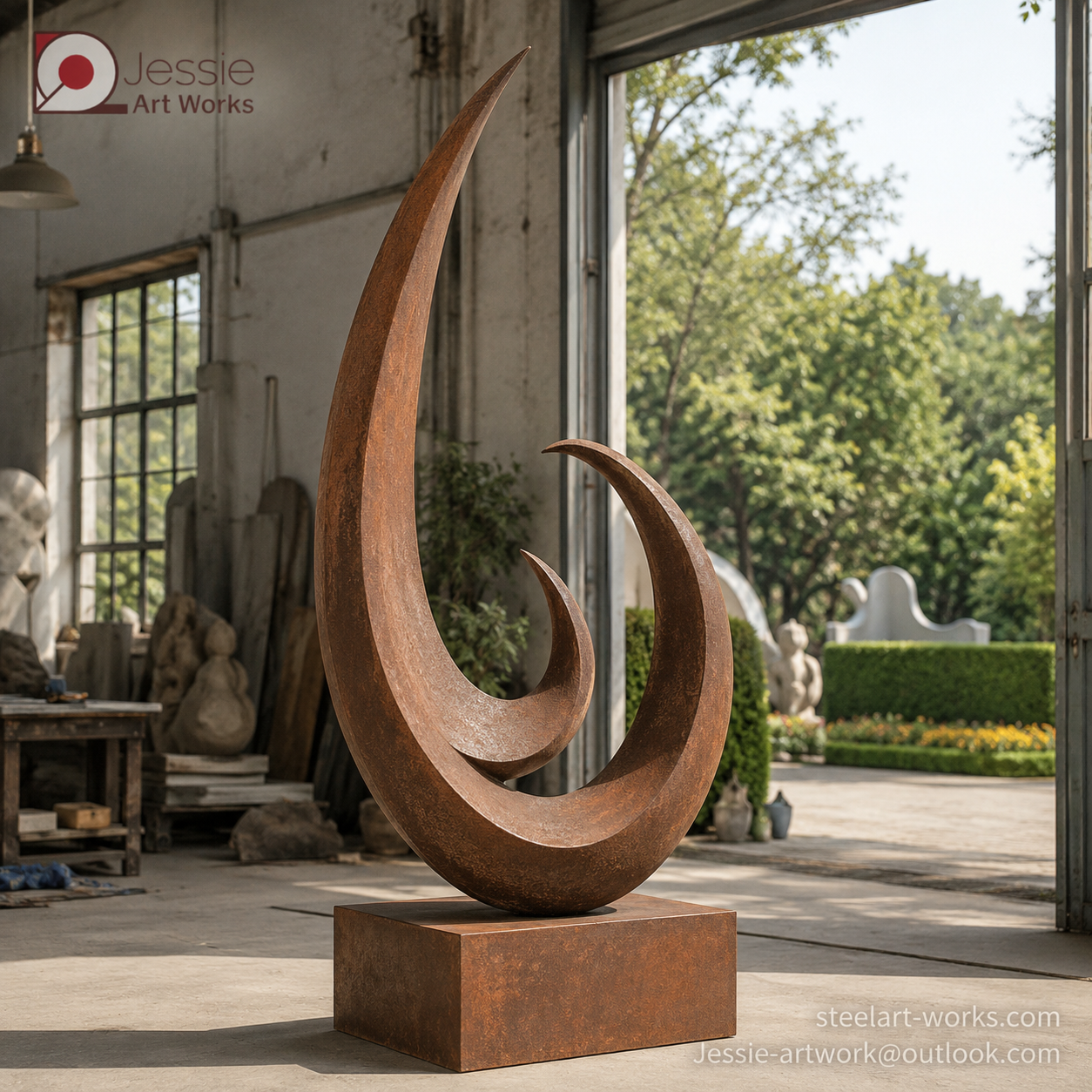
Corten‑Steel is the global industry name for weathering steel, widely used for monumental and landscape sculpture. Famous artists have embraced this material for its evolving rust‑toned patina. Yet Corten‑Steel is frequently misapplied. Wrong material grade, poor welding or unsuitable site conditions will cause staining, uneven colour and premature corrosion. This guide serves designers, art commissioners and sculpture buyers.
What Is Corten‑Steel
Corten‑A is the sculpture‑grade low‑alloy steel, alloyed with copper, chromium and phosphorus. Under repeated wet‑dry outdoor cycles, it forms a dense, self‑sealing protective patina, slowing further corrosion.
Critical rule: Stable patina requires alternating wet‑dry conditions. Constant dampness or coastal salt spray breaks down this protective layer.
Ageing cycle outdoors:
Raw: metallic grey
Weeks‑6 months: loose bright‑orange rust, runoff‑staining risk
6‑24 months: reddish‑brown transition
1‑3 years: stable dark chocolate‑brown patina. Minor scratches self‑heal.
Key Fabrication Rules for Corten‑Steel Sculpture
Material: Use mill‑certified Corten‑A. Minimum 5 mm thickness for free‑standing works; 8‑12 mm for monuments above 3‑4 m. Hollow sculptures must include drain weep holes to drain trapped water.
Cutting & forming: Laser / plasma cutting, bendable like mild steel. All thermal‑cut edges must be ground smooth to avoid patchy patina.
Welding (most critical step): Use Corten‑matched welding filler. Ordinary mild‑steel welds leave permanent mismatched seams. Grind and blend all weld beads. Isolate from dissimilar metals to avoid galvanic corrosion.
Patina options
Natural weathering: raw sculpture installed on‑site, full patina takes 1‑3 years, early‑stage runoff risk exists.
Factory accelerated patina: chemical treatment speeds oxidation, yet cannot fully eliminate initial rust runoff.
Sealing: Breathable clear sealer is optional, reduces staining but needs re‑application every 2‑4 years. Non‑breathable paint is forbidden.
Installation: Keep sculpture base away from wet soil; maintain air ventilation gap.
Advantages
Unique evolving earth‑toned aesthetic, harmonises with parks, memorial and land‑art settings, delivers tangible sense of time.
High tensile strength for large‑scale monumental forms, shorter lead‑time vs cast bronze.
Low maintenance once patina stabilises.
Better cost‑efficiency than bronze or 316 stainless steel for oversized installations, fully recyclable.
Flexible fabrication: abstract shapes, perforated panels, folded forms, wall‑mounted reliefs are all achievable.
Limitations
Rust‑water runoff: First 6‑24‑month period may permanently stain light‑coloured stone or concrete. Mitigate via accelerated patina + breathable sealer or dark paving.
Not fit for seaside salt‑spray locations; choose 316 stainless steel or bronze for coastal projects.
Fails under permanent wetness or submersion; avoid direct contact with overgrown vegetation.
Patina colour cannot be precisely pre‑matched, varies with local climate. Indoor display requires full sealing after pre‑rusting.
Many fabricators lack Corten‑specific welding skills; fake carbon‑steel with sprayed‑on rust coating exists on market. Check mill certificates for large projects.
Sealer is not permanent and needs periodic re‑treatment.
Material Quick Comparison
表格
Corten‑A 316 Stainless Steel Cast Bronze Look Evolving russet‑brown patina Cool silver metallic Golden, ages to green‑brown patina Best site Inland parks, memorials Coastal, urban plaza All climates Cost Moderate High Very high Large monument Excellent Good Limited by casting capacity Project Selection Guide
✅ Suitable: inland park, woodland landscape, memorial art, large abstract hollow‑cut monuments, projects accepting natural colour changes.
❌ Avoid: seaside salt‑spray sites, permanent water immersion, indoor use without sealing, light‑coloured stone directly underneath, projects requiring fixed unchanging colour.
Conclusion
Corten‑Steel delivers distinctive time‑infused visual value for outdoor sculpture, but it is not maintenance‑free. Good results rely on certified material, professional welding, drainage design and proper site assessment. When specifications are followed, Corten‑Steel sculptures can serve decades for public and private art commissions.
Contact us for custom Corten‑Steel sculpture solutions, including material verification and accelerated patina options.
Previous: 304 vs 316L Stainless Steel for Outdoor Sculptures: A Practical Selection Guide
Next: No Results